





Decision Journey
Internet Service Providers (ISPs) offer different packages that cater for the different needs of consumers. Before subscribing to a fixed internet package, there are a whole range of factors to consider. Alongside cost and contract duration, you will have to think about the download limits and internet speeds which best suit your needs. The most important aspect to consider when choosing an internet package is what type of activities you will be engaging in whilst using the internet service. Below you may find further information and tips you should consider before taking a decision.
What type of internet package do I need?
With such a vast range of super-fast and standard broadband packages to choose from, it is important that you first establish what type of web user you are. To help you take an informed decision, we have matched the type of broadband products that would be most suitable to different web users.
Users who log on to the internet to access their emails and browse the web
If you intend to use the internet just to check your emails and browse websites, it is advisable to choose an entry-level broadband service. This way, you will avoid paying for super-fast speeds that you may not need. Keep in mind that high-end internet speeds may not be available in all areas around Malta and Gozo. It is important that you seek advice from service providers when choosing a package.
Users engaging in activities such as video streaming and online gaming
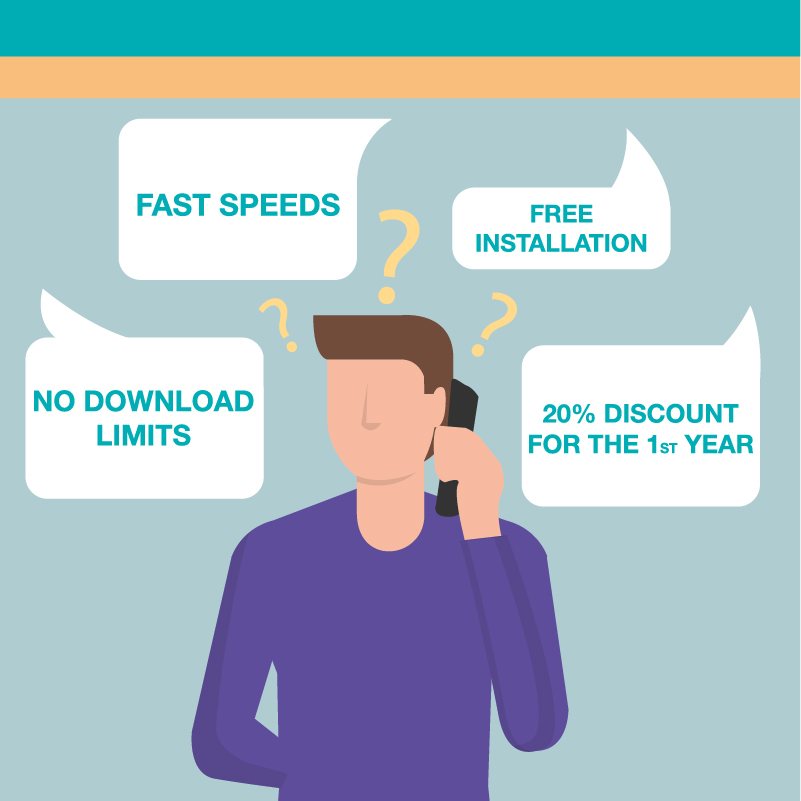
If you regularly stream videos, download large files or are a big enthusiast of online gaming, you will probably require an internet package which has an unlimited download limit and fast speeds that support this kind of activity. The same applies to households in which a number of different persons are likely to access the internet regularly and simultaneously.
Business users
Depending on the type of business you run, you may wish to subscribe to one of the packages exclusively designed by service providers for business users. These packages would normally include additional features (such as static/fixed-IPs, additional email accounts, etc.) which could be necessary for the type of business you operate. Indeed, a number of service providers would also be able to propose tailor-made solutions to fit the needs your business.
What are download and upload speeds?
The download speed indicates how fast you can retrieve data from the internet, such as when reading an email, streaming a video or downloading a file. On the other hand, upload speeds indicates how fast you send data from your device to other devices, such as when sending files via email, using video-chat, publishing pictures on social media etc.
You will notice that most connections are designed to download data much faster than they upload, since this activity is more common and frequent than the uploading activity.
Which fine print should I look out for before subscribing to an internet package?
Most prominently, you should look out for the:
i. Typical Speed Range’
Besides taking note of the maximum download and upload speeds that a particular package may reach, you are advised to look out for the ‘TSR’ short for ‘Typical Speed Range’ which provides a clearer indication of the speed performance that you are most likely to achieve when subscribed to that package. These speeds are measured in megabits per second (Mbps).
ii. Download Limits
Your ISP may set a download limit for a particular package and if you exceed that limit, your access to the internet could be considerably restricted, or even cut off. This does not apply if you are subscribed to an unlimited data package. Keep in mind that download activity is measured in megabytes (MB) or gigabytes (GB).
Besides these, there is more relevant information (such as the periodic rental fee, installation costs, duration of contract, etc.) that you need to be aware of, before subscribing to a package. Click here to visit the MCA’s FAQ section entitled ‘Subscribing to an Electronic Communications Service’ for more information.